KNEE HEALTH AFTER 50
KNEE PAIN AFTER ACTIVITY
Your knee can feel fine while you're active - and tell a different story later.
You have a good day, so you walk a little farther, finish the shopping, clean the house, exercise, or work in the yard. Your knee seems to handle it reasonably well. Then later that evening—or the next morning—you notice more stiffness or discomfort and wonder, “Did I do too much?”
Why Your Knee Can Be Hard to Read
Most of us judge an activity by how we feel while we’re doing it. If your knee seems okay during a walk, shopping trip, or household task, continuing may feel perfectly reasonable. But what happens during the activity is only one part of the picture.
How your knee feels during an activity is one observation point—not the whole story.
Four Moments Can Tell You More
Instead of trying to understand every ache, twinge, or stiff feeling, you can widen your observation window.
Choose one familiar activity and notice your knee at four simple points:
BEFORE → DURING → LATER → NEXT MORNING
Before — What is your starting point?
During — Is anything clearly changing?
Later — What feels different compared with before?
Next Morning — How does your knee compare with your earlier starting point?
You don't need to monitor your knee all day or keep a complicated pain diary. A few useful observations can give you a clearer picture than simply asking, “Did it hurt while I was doing it?”
What Changed—and When?
Your knee’s response isn’t only about discomfort. Sometimes the first clue is a change in how you move or complete an activity.
You may notice that you:
slow your pace
shorten your steps
take an unexpected break
avoid a certain movement
lean on a counter, railing, or shopping cart
change how you complete the task
These changes can happen almost automatically, which makes them easy to overlook. Your knee may not feel dramatically worse, but your behavior may already be telling you that something has changed.
Notice what you feel—but also notice what you do differently.
Notice First. Interpret Later.
When your knee feels different after an activity, it’s natural to want an explanation. But there’s an important difference between what you noticed and what you think caused it.
For example:
Observation: “My knee felt more stiff when I got up after dinner.”
Interpretation: “My afternoon walk was too much for my knee.”
The first describes what happened. The second tries to explain why it happened.
Your day may have included other things too—more standing than usual, stairs, housework, a long period of sitting, or another activity. That’s why one observation shouldn’t automatically become a permanent rule about what your knee can or can’t do.
Notice first. Interpret later.
Turn Your Observations Into a Clearer Picture
You don’t need to track everything you do or write a detailed pain diary. Start with one familiar activity—a walk, shopping trip, household task, exercise session, or time working in the yard.
Look at your four observation points together and ask:
What changed during the activity?
What showed up later?
What was different the next morning?
Was anything else about the day obviously different?
This gives you a simple timeline instead of a vague memory that your knee was just “better” or “worse.”
The goal isn’t to explain every change. It’s to create a clearer record of what you actually noticed.

Want to Understand Your Knee’s Patterns Better?
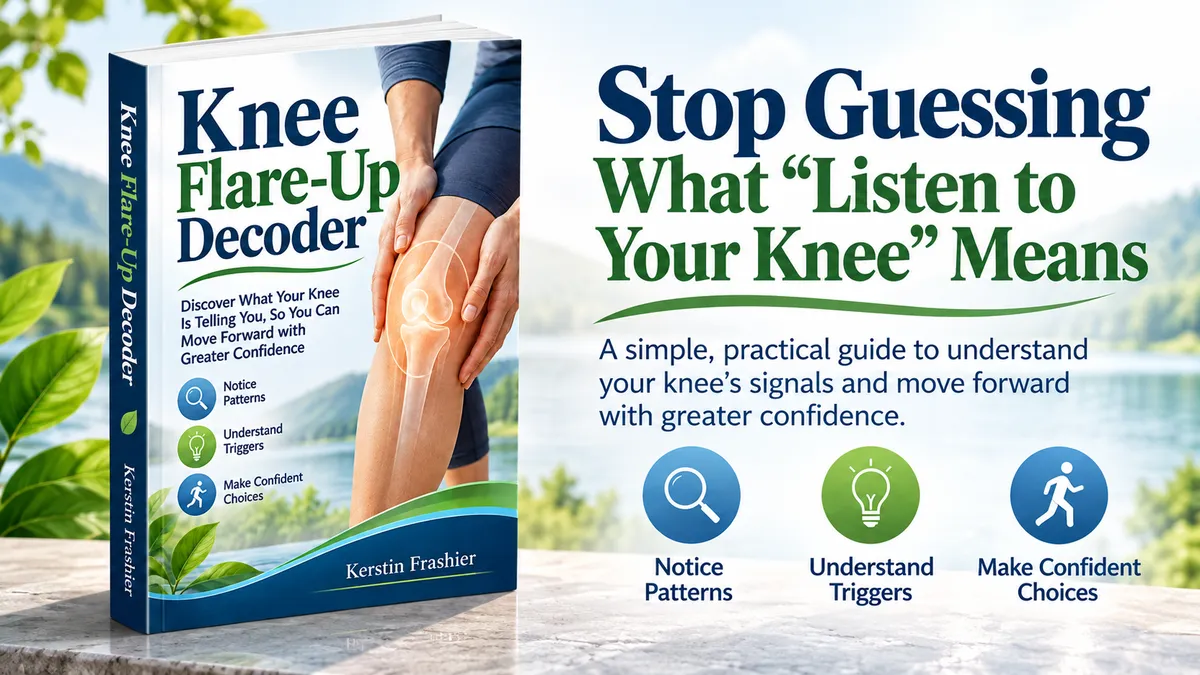
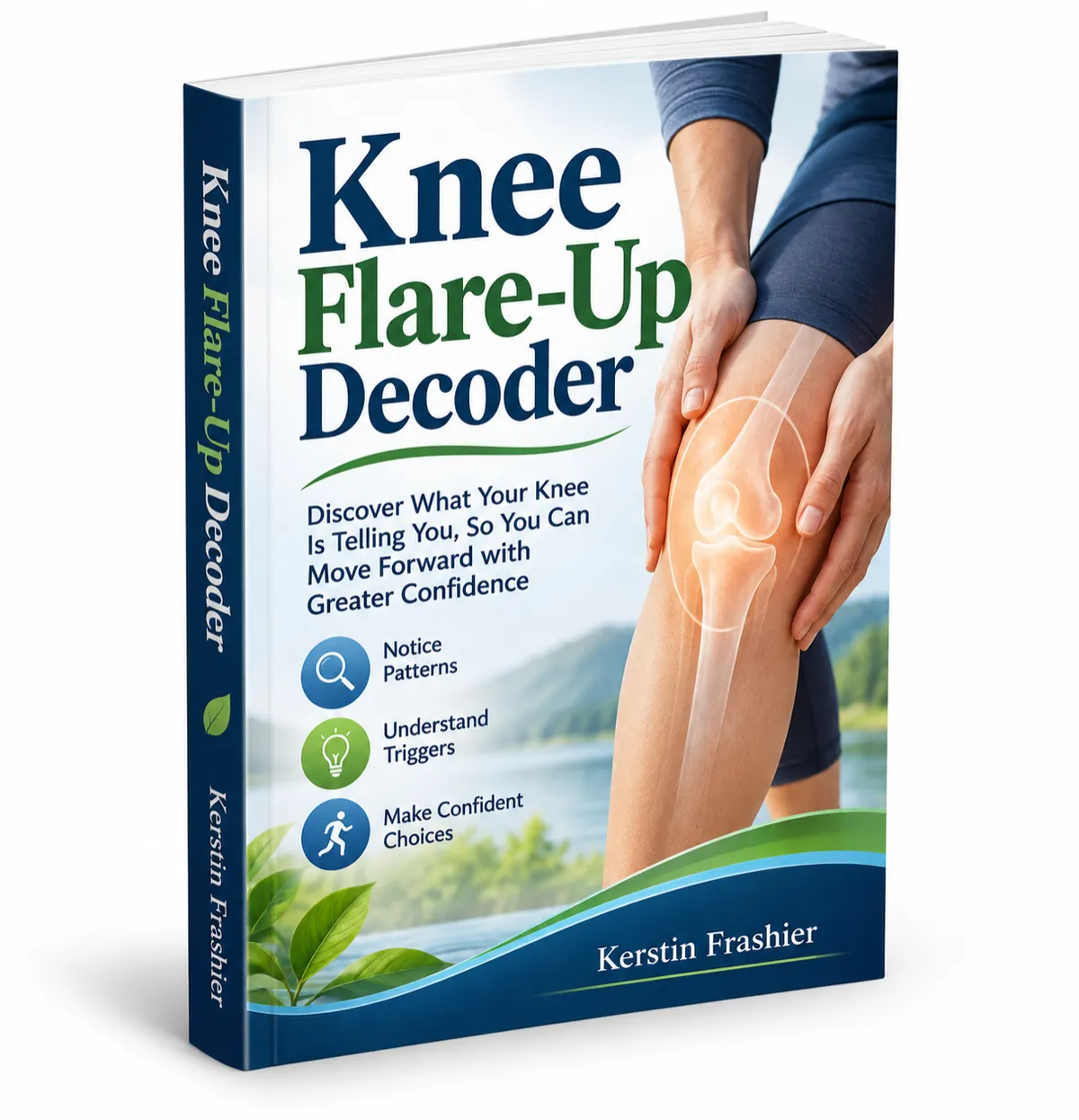
I created the Knee Flare-Up Decoder to make this process easier. It walks you through the Before → During → Later → Next Morning method and helps you create your own simple Knee Response Map.
You’ll also get a printable three-page Knee Response Map you can use with a familiar activity, so you don’t have to rely on memory when you’re trying to figure out what changed.
Both resources are available inside my free private Healthy Rebels community, along with other practical resources for adults who want to stay active, mobile, and independent.
Choose One Familiar Activity
A Simple Way to See the Bigger Picture
Your knee doesn’t experience an activity as one isolated moment. What happens before, during, later, and the next morning can give you a more complete picture of how it responded.
The Knee Flare-Up Decoder helps you organize those observations without turning your day into a complicated tracking project. The goal is simple: notice useful patterns, understand your responses better, and have clearer information to work with.
Check Four Key Moments.
You Don’t Need to Track Everything
A useful knee record doesn’t need to include every step you take or every sensation you feel. Too much tracking can quickly become overwhelming.
Instead, focus on a few details that help you compare one point with another. What was your knee like before you started? Did anything clearly change while you were active? What did you notice later that day? And how did things compare the next morning?
The goal is not to create a perfect record. It’s to capture enough information to help you recognize patterns that might otherwise be easy to miss.
Record What You Notice
Build Your Knee Response Map
Once you begin noticing the same activity at different points in time, those observations can start to form a more useful picture.
Your Knee Response Map brings those pieces together in one place. Instead of relying on memory or simply thinking, “My knee was worse afterward,” you can look back at what you noticed before, during, later, and the next morning.
Over time, this can help you recognize patterns and give you clearer information about how your knee responds to everyday activity—without turning every good day into a test of your limits.
Build Your Knee Response Map
Want the Complete Knee Flare-Up Decoder?
The Knee Flare-Up Decoder takes you through the complete process step by step and includes a printable Knee Response Map to help you record what you notice.
It’s available inside my free private Healthy Rebels community, along with additional resources designed to help you stay active, mobile, and independent.
About Kerstin Frashier
Kerstin Frashier is a retired physical therapist, health author, and founder of Healthy Rebels over 50.
Before moving to the United States, she worked for 15 years as a physical therapist in hospitals in Germany, helping patients regain strength, movement, and independence.
Her interest in mobility and recovery is also personal. As a teenager, Kerstin survived a serious accident that left her temporarily paralyzed and required her to rebuild her own mobility step by step.
Today, she uses her professional background, personal experience, and continued interest in healthy aging to share practical educational information for adults over 50.
Her goal is simple: help people better understand their bodies and encourage small, realistic habits that support an active and independent life.
Health Disclaimer: This content is for educational and informational purposes only and is not intended to diagnose, treat, cure, or prevent any medical condition or replace professional medical advice. If you have new, worsening, persistent, or concerning knee symptoms, or are unsure whether an activity is appropriate for you, consult an appropriate healthcare professional before making changes to your activity or exercise routine.