MOBILITY AFTER 50
Mobility After 50: Move More Without Adding Another Workout
Staying mobile after 50 doesn't always require another workout, more equipment, or a complicated exercise routine.
Some of the easiest opportunities to move more are already built into your day.
Getting out of a chair, waiting for the coffee to brew, brushing your teeth, talking on the phone, or standing at the kitchen counter can all become simple reminders to move your body for a minute.
The key is not trying to remember to “move more.” It's connecting movement to something you already do.
Why Moving More Doesn't Have to Mean Working Out More
When people decide they need to move more, the first thought is often, “I need to exercise more.”
But another workout isn't always the answer—especially when your day is already full.
Movement doesn't have to happen only during a scheduled exercise session. Small amounts of movement throughout the day can give you more opportunities to bend, reach, stand, shift your weight, move your joints, and simply spend less time staying in one position.
The challenge is remembering to do it.
That's where everyday triggers can help.
You don't always need more workout time. You need more opportunities to move.
Turn Things You Already Do Into Movement Triggers
Think about the things you already do every day without needing a reminder—making coffee, brushing your teeth, getting up from a chair, preparing a meal, talking on the phone, or waiting for something to finish.
These familiar moments can become movement triggers.
Instead of creating another schedule you have to remember, you connect one simple movement to something that's already part of your normal day.
For example, standing at the kitchen counter might remind you to gently rise onto your toes a few times. Talking on the phone might become a reminder to stand up or walk around the room. Getting out of your favorite chair could remind you to take a moment to straighten up and move before continuing with your day.
The movement doesn't need to be difficult or last very long. The goal is simply to create more natural opportunities to move throughout the day.
The Trigger Comes First
A good trigger is something you already notice and do regularly.
That's what makes this approach different from setting another alarm or trying to remember a vague goal like “I should move more.”
The trigger does the reminding for you.
When this happens → I do this movement.
Choose a Trigger You'll Actually Notice
The best movement triggers aren't unusual events. They're ordinary things that happen naturally throughout your day.
Look for moments you rarely miss—pouring your morning coffee, brushing your teeth, getting up from your favorite chair, waiting for the microwave, or starting the dishwasher.
A trigger works best when it's specific and easy to recognize. “Move more this afternoon” is easy to forget. “When I start the coffee maker, I'll move for one minute” gives your brain a clear cue.
Start with the routines you already have instead of trying to create new ones.
Don't build a new routine. Let your existing routine remind you to move.
Match the Movement to Where You Are.
A movement that works well in one part of your day may not make sense somewhere else.
That's why your movement should match both the trigger and the place where it happens.
If you're standing at the kitchen counter, you might choose a simple standing movement while using the counter for support if needed. If you're sitting at your desk or watching television, a seated movement may be more practical. And if you're talking on the phone, simply standing up or walking around the room might be enough.
The easier the movement fits into that moment, the more likely you are to actually do it.
You can also choose a seated or easier alternative when needed. The goal isn't to make every movement challenging. It's to make movement easier to include in your everyday life.
Choose the movement for the moment—not the other way around.
Start With Just a Few Triggers
You don't have to redesign your entire day at once.
Start by noticing a few routines that already happen naturally. Morning coffee, brushing your teeth, preparing lunch, getting up from your favorite chair, or turning on the television could all become useful triggers.
Choose the easiest ones first. Once those begin to feel natural, you can add more.
Simple is easier to repeat.
Keep Each Movement Simple
A mobility break doesn't need to become a workout.
Choose a movement that feels comfortable, fits the space you're in, and can be done in about a minute. You might stand and reach, gently move your shoulders, rise onto your toes while holding a counter, march while seated, or simply get up and walk around.
The goal is not intensity. The goal is to create another opportunity to move.
One minute is enough to make the trigger useful.
Make It Easy to Adjust
Some days your body may feel different than others. Your movement plan should be flexible enough to change with you.
If standing isn't comfortable, choose a seated alternative. If a movement doesn't feel right in that location, choose another one. And if you miss a trigger, simply continue with the next one.
You don't need to catch up or turn missed movement breaks into extra work.
The plan should fit your life—not make your life harder.
Instead of asking, “When will I find time to move more?” ask: “What am I already doing that could remind me to move?”
Create Your Daily Mobility Minute Map
Once you understand the idea, you can begin putting your own simple movement plan together.
Think of it as a Daily Mobility Minute Map: familiar moments throughout your day paired with simple movements that take about a minute.
You might connect a morning routine with one movement, lunchtime with another, and something you regularly do in the evening with another.
You aren't trying to squeeze several mini-workouts into your day. You're creating small reminders to change position, move your joints, stand, reach, walk, or gently use your body instead of remaining still for long stretches.
Over time, those familiar daily moments can become natural reminders to move.
Trigger → Simple Movement → One Minute
Find Your Everyday Movement Triggers
What do I do every morning without thinking about it?
When do I usually sit for longer periods?
What do I regularly wait for—coffee, the microwave, or something else?
When am I already standing near a counter or sturdy support?
What part of my day would work well for a seated movement?
When could I easily stand up or walk for one minute?
Which daily routines happen consistently enough to remind me to move?
You don't need seven perfect answers right away.
Start by noticing the routines that already happen consistently in your life. Those are usually better triggers than creating new reminders or alarms you may eventually ignore.
Once you've identified a trigger, choose one simple movement that fits naturally into that place and moment.
Keep it practical. If you're at the kitchen counter, choose something that works there. If you're sitting, choose a seated movement. If you're already on your feet, perhaps walking or another simple standing movement makes more sense.
Your Daily Mobility Minute Map should feel like it belongs in your day—not like another list of things you have to accomplish.
One trigger. One movement. One minute.
Your goal isn't to add more to your schedule. It's to make movement a natural part of the day you already have.
A Quick Word About Safety
Adding more movement to your day should never mean ignoring what your body is telling you.
Choose movements that feel appropriate for you, and use a sturdy chair, counter, or other stable support when needed. Seated alternatives are perfectly fine when standing movements aren't comfortable or practical.
Move at a comfortable pace and stay within a range of motion that feels manageable. If a movement causes pain, dizziness, unusual weakness, or makes you feel unsteady, stop.
If you have a medical condition, recent injury, significant mobility limitation, or concerns about whether a movement is appropriate for you, talk with an appropriate healthcare professional before beginning a new activity routine.
Movement should support your day, not put you at unnecessary risk.
Want the Complete 7 Daily Mobility Triggers Guide?
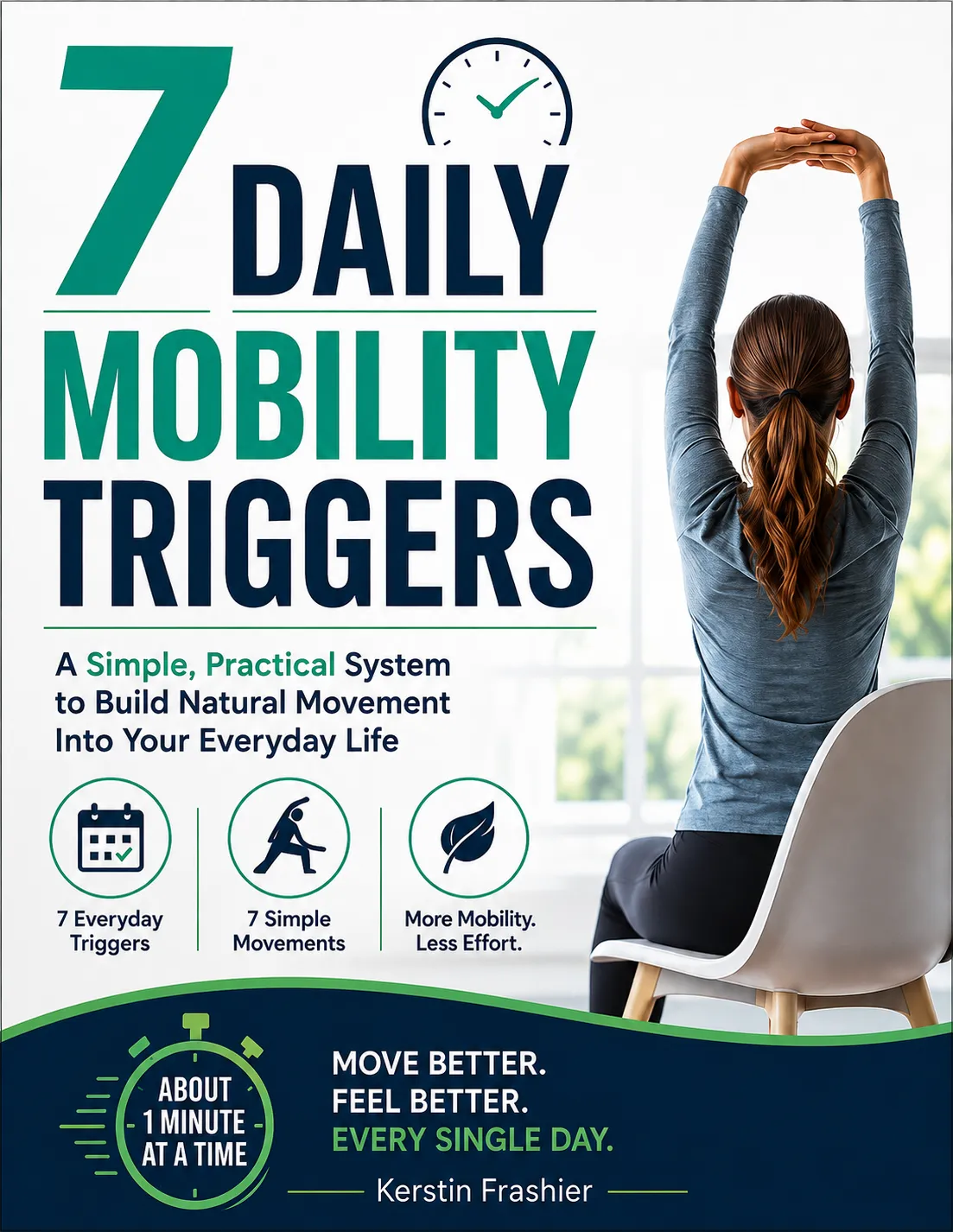
This article gives you a simple way to start adding more movement to your everyday life. But if you'd like help putting the complete system together, I've created 7 Daily Mobility Triggers for Healthy Rebels Premium members.
The guide walks you through creating your own Daily Mobility Minute Map by choosing seven familiar daily triggers and matching each one with a simple one-minute movement.
You'll also learn how to choose triggers you're likely to notice, match movements to where you are, use seated or easier alternatives when needed, and keep the entire approach practical enough to fit into real life.
7 Daily Mobility Triggers is available inside the Healthy Rebels Premium Classroom.
Join free today. Premium resources are available when you're ready for more.
Healthy Aging Is Easier With Support
Making healthy changes can feel much easier when you're surrounded by people working toward similar goals.
That's why I created Healthy Rebels 50+—a private community for adults over 50 who want practical ideas, encouragement, and support for living a healthier, more active life.
You can join the community for free and start exploring the resources and conversations available to all members. If you decide you want more, the Premium Classroom gives you access to additional guides, books, resources, and member content.
There's no pressure to do everything at once. Start where you are, take what helps you, and keep moving forward.
Small changes. Real support. A healthier life on your terms.
About Kerstin Frashier
Kerstin Frashier is a retired physical therapist, health author, and founder of Healthy Rebels over 50.
Before moving to the United States, she worked for 15 years as a physical therapist in hospitals in Germany, helping patients regain strength, movement, and independence.
Her interest in mobility and recovery is also personal. As a teenager, Kerstin survived a serious accident that left her temporarily paralyzed and required her to rebuild her own mobility step by step.
Today, she uses her professional background, personal experience, and continued interest in healthy aging to share practical educational information for adults over 50.
Her goal is simple: help people better understand their bodies and encourage small, realistic habits that support an active and independent life.
Health Disclaimer: This content is for educational and informational purposes only and is not intended to diagnose, treat, cure, or prevent any medical condition or replace professional medical advice. Choose movements appropriate for your individual abilities and circumstances. If you have a medical condition, recent injury, significant mobility limitation, pain, dizziness, or concerns about beginning a new activity routine, consult an appropriate healthcare professional before making changes to your exercise or movement routine.