SLEEP AFTER 50
Sleep After 50: Stop Fighting Sleep and Start Preparing for It
Getting into bed tired doesn't always mean your mind is ready for sleep. After a busy day, thoughts, screens, unfinished tasks, and everyday stress can follow you right into the bedroom.
Instead of trying harder to fall asleep, it can help to create a simple transition between the activity of your day and the quiet of bedtime.
The goal isn't to force sleep. It's to create a calmer, more predictable routine that helps your body and mind prepare for rest.
Why Sleep Can Feel Different After 50
Sleep can change as we get older. You may notice that you wake more often during the night, feel sleepy earlier in the evening, or don't sleep as deeply as you once did.
But age isn't the only thing that can affect your nights. Stress, medications, health conditions, pain, changes in daily routines, and even your sleep environment can all play a role.
That's why better sleep isn't always about finding one perfect trick. A helpful place to start is by looking at what happens before you get into bed.
Your evening habits can create a clearer transition from a busy day to a quieter night—and that's where a simple bedtime routine can help.
Instead of asking, “Why can't I sleep?” try asking, “How can I prepare my body and mind for sleep?”
Why Trying Harder to Sleep Can Backfire
When sleep doesn't come easily, it's natural to start trying harder.
You check the clock. You change positions. You wonder how many hours are left before morning. You may even start worrying about how tired you'll feel the next day.
But all that effort can make bedtime feel like another problem you have to solve.
A different approach is to take some of that pressure away. Instead of making sleep the task, make preparing for sleep the task.
That might mean putting away your phone, lowering the lights, slowing your breathing, or following the same few calming steps each evening.
You don't have to make yourself fall asleep. Your job is simply to create conditions that make rest feel more welcome.
Don't make sleep your task. Make preparing for sleep your routine.
Your Brain Needs a Transition From Day to Night
Your day doesn't always end just because the clock says it's bedtime.
You may still be thinking about conversations, tomorrow's plans, unfinished chores, emails, family responsibilities, or something you saw on your phone. Your body may be tired while your mind is still operating in “day mode.”
A simple bedtime routine can create a bridge between the two.
Repeating a few familiar, calming actions each evening reduces the number of decisions you have to make when you're already tired. Over time, those actions can become familiar cues that it's time to slow down.
The routine doesn't need to be long or complicated. In fact, simpler may be easier to repeat consistently.
Your evening routine isn't about adding more to your day. It's about creating a clear ending to it.
Reduce Evening Stimulation Before Bed
One of the simplest ways to create a smoother transition toward bedtime is to notice what keeps your mind active late in the evening.
Phones, television, news, work emails, household chores, and even planning tomorrow's schedule can keep the day going longer than you realize.
You don't have to eliminate everything you enjoy at night. Instead, choose a point when you begin reducing stimulation and stop starting new tasks.
That could mean putting your phone away, turning off the television, closing your laptop, or dimming bright lights.
The specific action matters less than creating a clear signal: the busy part of the day is finished.
Bedtime is not productivity time. Tomorrow's tasks can wait until tomorrow.
Create a Bedroom That Supports Sleep
Your bedroom doesn't need to look like a luxury hotel to feel more restful.
Small changes can help reduce distractions and make the room feel calmer as bedtime approaches. Think about lighting, noise, temperature, electronics, and anything else that tends to interrupt your evening routine.
You might dim the lights, silence phone notifications, close the curtains, adjust the room temperature, or simply clear the area around your bed.
The goal isn't perfection. It's to make your bedroom feel less like an extension of your busy day and more like a place where you can slow down.
Start with what you already have. You don't need expensive sleep gadgets or a complete bedroom makeover to begin.
A calmer bedroom doesn't have to be a perfect bedroom. Removing even one distraction is a good place to start.

Choose a Simple Bedtime Trigger
A bedtime routine becomes easier to follow when it has a clear starting point.
Choose one familiar action that signals the beginning of your wind-down time. It could be dimming the lights, closing the curtains, brushing your teeth, turning off the television, or making a caffeine-free herbal tea.
The action itself doesn't need to be special. What matters is choosing something simple that fits naturally into your evening and can be repeated consistently.
Think of it as your personal signal that the active part of the day is ending and it's time to begin slowing down.
Your bedtime trigger doesn't need to be complicated. It just needs to be familiar enough to say, “The day is winding down.”
Build a Routine You Can Actually Repeat
A bedtime routine doesn't need ten steps to be useful. In fact, making it too complicated can make it harder to follow.
Choose a few calming activities that you genuinely enjoy and that fit naturally into your life. Gentle stretching, slow breathing, reading a few pages, quiet music, prayer, gratitude, or simply sitting quietly may all be options.
The important part is creating a routine that feels realistic enough to repeat—not one that only works on a perfect evening.
And when life gets busy, your routine can become shorter instead of disappearing completely.
Consistency doesn't mean doing everything perfectly every night. It means having something simple you can return to again and again.
A simple routine you repeat is more useful than a perfect routine you abandon.
What If Your Mind Won't Slow Down?
Sometimes your body feels tired, but your thoughts seem to get louder the moment everything becomes quiet.
You may replay a conversation, think about something you forgot to do, plan tomorrow, or worry that you're still awake. Trying to force those thoughts away can sometimes make them feel even more important.
Instead, give your mind a simple way to transition out of problem-solving mode.
You might write down a few things you need to remember tomorrow, think about something you're grateful for, read a few pages of something calming, or spend a few minutes breathing slowly.
The goal isn't to empty your mind completely. It's to stop asking it to solve tomorrow's problems tonight.
You don't have to solve tomorrow tonight. Give your mind permission to leave it until morning.
When Sleep Problems Need More Than a Bedtime Routine
A simple bedtime routine can be a helpful part of healthy sleep habits, but it isn't the answer to every sleep problem.
If you're regularly having trouble falling asleep or staying asleep, waking much earlier than intended, feeling unusually tired during the day, or experiencing sleep problems that interfere with daily life, it's worth talking with an appropriate healthcare professional.
Snoring, gasping or pauses in breathing during sleep, ongoing pain, medication effects, or other health concerns may also deserve professional attention.
A bedtime routine can support a calmer transition into the night, but it shouldn't replace evaluation or treatment when a sleep problem may have another cause.
Better sleep habits can support you, but persistent or concerning sleep problems deserve professional attention.
Want Help Building Your Own Sleep Reset?
Your evening routine should fit your life—not someone else's idea of the perfect bedtime.
20-Minute Sleep Reset was created to help you build a simple, personalized bedtime routine that you can actually use. Instead of giving you another long list of sleep tips, it walks you through creating a calming routine step by step.
Inside, you'll create your own sleep setup, identify evening distractions, choose calming activities, build your personalized 20-minute routine, and create a shorter version for busy nights.
The complete 20-Minute Sleep Reset is available inside the Healthy Rebels Premium Classroom.
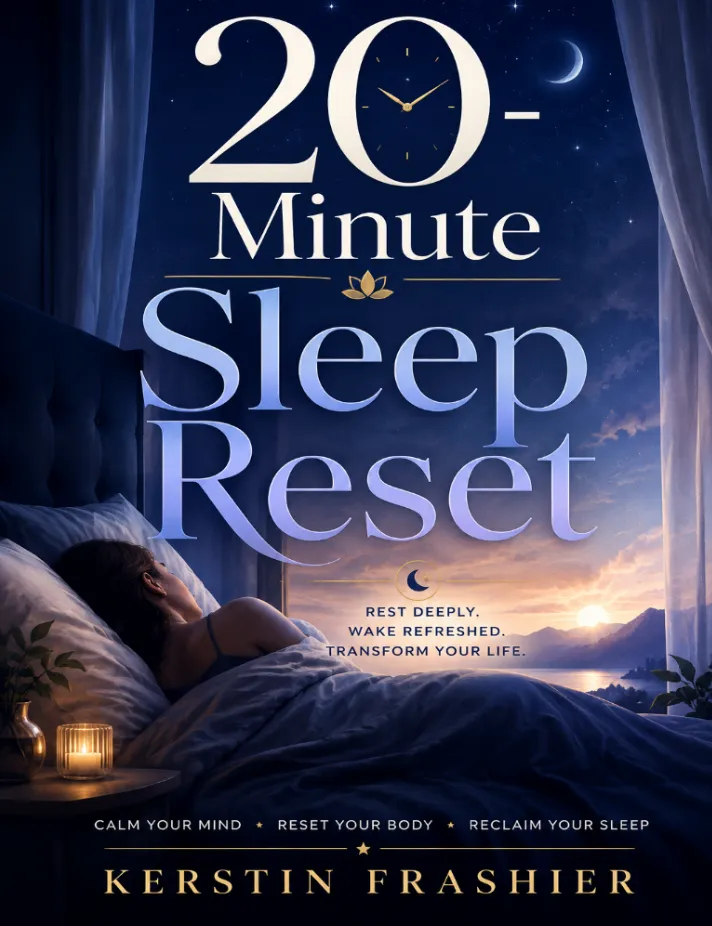
20-Minute Sleep Reset is available in the Healthy Rebels Premium Classroom, along with other books, guides, and resources created to support healthy living after 50.
You can start by joining Healthy Rebels over 50 for free. Explore the community, meet other Healthy Rebels, and see what's available. If you'd like access to the Premium resources, you can upgrade when you're ready.
About Kerstin Frashier
Kerstin Frashier is a retired physical therapist, health author, and founder of Healthy Rebels over 50.
Before moving to the United States, she worked for 15 years as a physical therapist in hospitals in Germany, helping patients regain strength, movement, and independence.
Her interest in mobility and recovery is also personal. As a teenager, Kerstin survived a serious accident that left her temporarily paralyzed and required her to rebuild her own mobility step by step.
Today, she uses her professional background, personal experience, and continued interest in healthy aging to share practical educational information for adults over 50.
Her goal is simple: help people better understand their bodies and encourage small, realistic habits that support an active and independent life.
Health Disclaimer: This content is for educational and informational purposes only and is not intended to diagnose, treat, cure, or prevent any medical condition or replace professional medical advice. If you have persistent sleep problems, significant daytime sleepiness, breathing concerns during sleep, or other health concerns affecting your sleep, consult an appropriate healthcare professional.